


A relentless focus on five-star guest connections and a strategic expansion into hands-on cooking classes has propelled The Roman Food Tour far beyond the Italian capital, driving 58% revenue growth in the last year.
Focusing on local connection and embracing the potential of OTAs early has helped transform The Roman Food Tour from a neighborhood startup into a nationwide — and now international — operation.
Its founders, Joshua Elledge and Henry Cunningham, built their first tours in 2013 around the residential Rome neighborhood where they actually lived. Places you’d only find if a local took you there. Now, the business has around 60 guides running 20 experiences. They’ve expanded beyond the Italian capital, from Palermo to Venice, and recently into Madrid.
General Manager Celeste Dorigo didn’t start in the office. She began as a guide on the streets of Rome, walking guests through the city one bite at a time. Here, she shares standout moments from her guiding days and the ride she’s been on as The Roman Food Tour has grown. She also dives into how the company leverages its relationship with GetYourGuide to test new products, predict demand, and maintain its five-star standards at scale.
How did The Roman Food Tour get started?
It all started quite innocently. The founders, Joshua and Henry, realized that many tourists focused on the famous, obvious neighborhoods rather than the neighborhoods where they and other locals actually lived. It was much more residential and had amazing food.
They started taking people there, people they knew, and then on tours, and quite quickly it turned out there was a real demand.
What was the business like when you joined, and how has it changed?
I’m originally from the Netherlands, but I have roots here in Italy, and I joined the company as a tour guide in 2018. When I started, we had 10 guides, all based in Rome, and the office was just the two owners. That’s really all it was.
I left for a couple of years to work as a digital marketing consultant back in the Netherlands, but I missed it. When I came back, I stepped into the general manager role. By then, the business had already started expanding. Today, we are a full office in charge of operations, marketing, and sales, and we have around 60 guides in the field.
How did you find GetYourGuide, and what made you sign up?
We joined GetYourGuide in 2015, two years after the company launched. Before that, Josh and Henry had already found success in selling tours directly because they were great at building websites.
They also had quite a network in tourism, so they’d use friends, colleagues, and acquaintances to sell the food tour to people already in the country. But that’s so manual, and it takes so many people.
With GetYourGuide, it’s effortless. You sign up, and you can actually keep track of how it’s performing and what it’s bringing to you. It’s very tangible.

In a sentence, what role does GetYourGuide play in your growth strategy?
There’s a level of security that it gives us in getting bookings, so we can focus on everything else we have to organize ourselves, and all of that translates into growth.
When did the company’s growth really take off?
The real growth came in the last three years, especially with our cooking classes. We found a really effective way of doing those.
Fewer and fewer people want to spend money on an all-day tour focused solely on history. People want it to be more interactive, and cooking is one of the best ways to do that — especially in Italy, where the food is so amazing. It’s literally all some people come for.
Cooking classes also translate easily across cultures. People already know what to expect when you say the words “cooking class.” The only thing they wonder is what the recipe will be.
How do you maintain a five-star experience while scaling so fast?
It’s very tricky. We’d have never been able to do it if the founders hadn’t been on top of it from the get-go. When I started, if we had a four-star review, we would have them on the phone. It was intense! They were stricter on me back then than they are on the guides right now, but it set the tone and educated us about how important reviews and reputations are.
Now, we train our guides so that every tour is essentially the same experience. If the guide changes, it doesn’t mean the experience changes. But it also isn’t a script, because that’s boring.
We teach them to read the room and make it a conversation. Ask if someone’s happy, don’t just assume. We give them the freedom to fix things in the moment, too. If a guest doesn’t like the wine, they get a different one. If we have to spend a couple more euros to save a bad review, we just do it.
What are some of the most memorable moments you’ve had on a tour?
You’re basically a friend as well as a guide when you do a food tour.
I’ve had a guy traveling alone, dressed like he walked out of a cartoon with a Hawaiian shirt and a camera around his neck, grab my shoulder and tell me it was the most beautiful day of his life. I had a group get so drunk they literally chanted my name, letter for letter, through the streets.
One mom had a kid and told me at the start of the tour that her son had so many dietary restrictions I shouldn’t even bother trying to find substitutes. He looked almost scared of eating. With the passion I feel and the freedom the company gives me, that really bothered me. I made it my mission to feed him at every single stop; it was mostly cured meat that he could have, but I managed to make him feel like he belonged and was part of the group.
How do you decide what new experiences to launch, and where to expand?
We get ideas by listening to B2B partners, and the owners are always out in the field talking to partners with spaces or new ideas. But GetYourGuide is so quick to generate bookings that we use it as a test. If we put a new tour live and it’s not generating bookings, then there’s no demand. It tells us very quickly if something will work.
The data and analytics also help us decide where to expand. Sometimes we’ll see data that tells us we need to increase capacity in a specific city — something we might not have realized without it. We’ll see predictions for how many seats we will sell in the summer, letting us know when we don’t have enough. That kind of advanced data analysis changes how you grow.
A year ago, we were just brainstorming new cities. Now we brainstorm how to make our presence in one city bigger, which is a significantly easier route to growth.

What is the biggest challenge you face on OTAs right now?
We’ve noticed more competition, and it seems like the most important tool to stand out on some OTAs right now is price, rather than quality. A consultant from another platform suggested we lower our price because a competitor was cheaper, without noticing that the competitor’s tour was half the length of ours. At some point, there’s no margin left.
You always want to make sure your quality and value come through.
What does success look like for the business over the next few years?
We are working a lot on optimizing the products we already have, and making sure we can compete. Our ambition is to really expand into Europe. If you ask the founders, they would say the world, but I’ll say Europe for now.
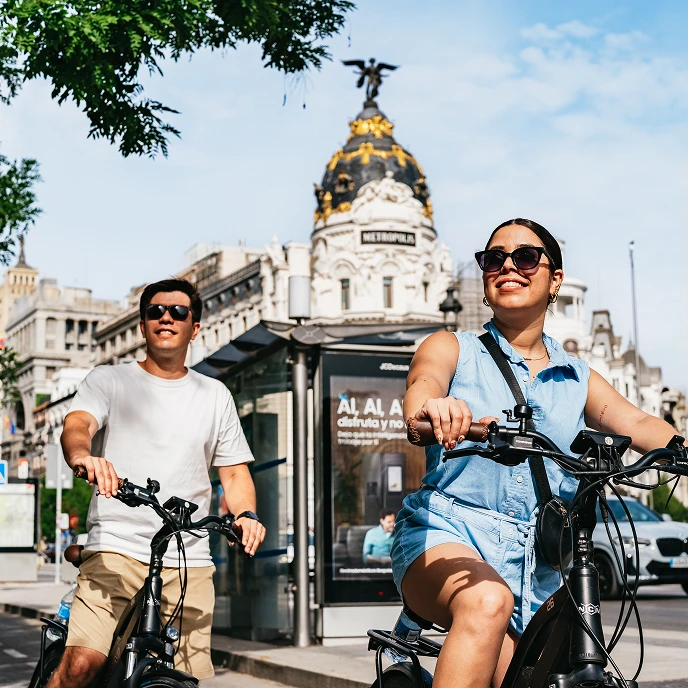
We’ve just opened in Madrid with a paella cooking class and a food tour. Maybe Barcelona will be next.
What advice would you give to operators who are skeptical about working with OTAs?
Always try. You’ve got to invest and trust in order to get, especially in the beginning. If you regret it, you stop the collaboration. But it really gives you an opportunity and a kickstart. Building your own marketing and brand takes a huge amount of time. Working with a platform like GetYourGuide, it’s a lot more instant, and that builds confidence.
Key takeaways
• Focus on connection. The Roman Food Tour started by showcasing a residential neighborhood and leaning into the social side of food, connecting with tourists and locals in a way that hadn’t been done before.
• Lean into travel trends. Cooking classes have become a massive growth engine because the concept easily translates across cultures and fulfills the growing demand for interactive, hands-on experiences. The Roman Food Tour’s top seller is a pasta and tiramisu class in Rome, which has driven €220,000 in revenue and roughly 5,000 tickets through GetYourGuide alone.
• Let data guide expansion and capacity. Celeste uses analytics and regular updates from GetYourGuide to identify where to grow next and predict seasonal seat demand. This data-driven approach is fueling serious momentum, with the business seeing 58% year-over-year revenue growth in 2026.
• Use OTAs for fast demand signals. Because of GetYourGuide’s high traffic, Celeste’s team uses early booking signals to quickly understand what works and what needs tweaking, bypassing months of guesswork.
• Expand your reach. Reaching a global audience through OTAs shifted The Roman Food Tour’s demographics. Today, their customers mostly come from the US (30%), followed by the UK, Germany, and Australia, with many booking well in advance rather than when they are already in Italy.
.png)
.png)