




At the top of One World Trade Center, the team combines global reach, booking data, and local insight to keep demand strong year-round.
Most attractions spend years trying to get noticed. Legends OWO, the operator of One World Observatory, starts from a very different position. Sitting at the top of One World Trade Center, it has one of New York City’s most recognizable addresses and panoramic views across the city. The challenge isn’t simply getting people to notice it. It’s giving them a reason to choose it in a city packed with competing attractions.
“It’s the best job in the world,” says Sarah Koehler, who joined as director of sales at Legends OWO last fall. “The only problem is that my competition is also world-class attractions. The competition is the best in the world, so I'm always coming to work thinking about how we earn our place among Broadway, The Met and the other observation decks in the city.”
“I wasn't coming in to grow demand, necessarily, because we're fortunate to have global brand recognition,” she explains. “You can't rest on your laurels and say 'We’re famous, people will come and find us,' because that's categorically not the case in a city like New York.”
For Koehler, that means making smart decisions about where One World Observatory shows up, who it reaches, and how it responds to changing demand. GetYourGuide forms a key part of that channel mix, helping the team reach travelers at different stages of their trip and providing data that can shape its wider sales strategy.
Here, Koehler explains how Legends OWO competes for attention in New York, uses booking patterns to identify new opportunities, and turns global recognition into sustained demand.
You’re an incredibly popular attraction in an iconic building in one of the world’s global cities, but what’s the best thing about One World Observatory?
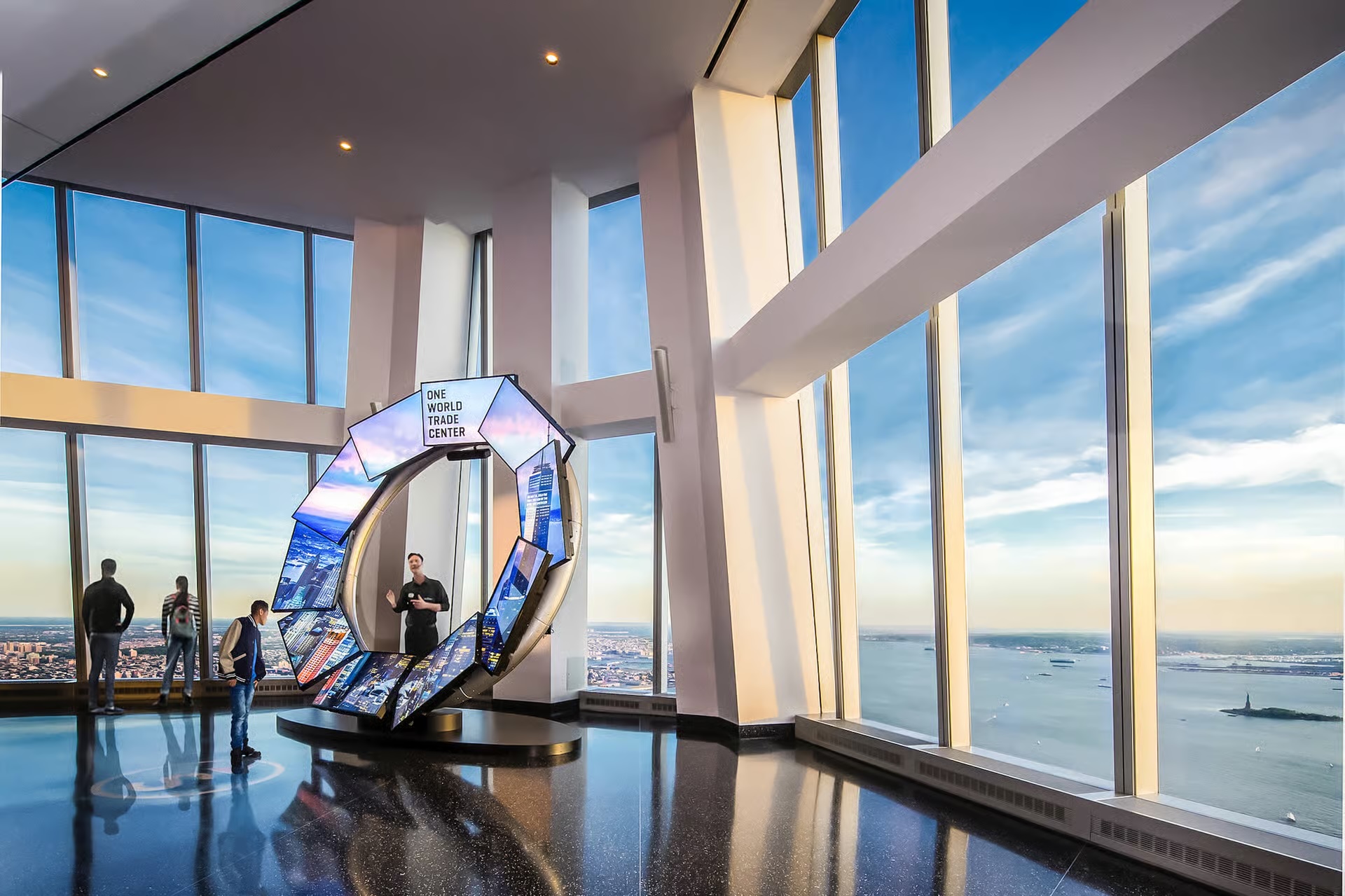
You're getting the best views of New York from the tallest building in town. It's a really unique way to look at the city. You can see all the way to Connecticut when the clouds cooperate, as well as New York, New Jersey, and the surrounding area, into Brooklyn, all from one place.
We have the best views of the water out of anyone in town, and you really get a sense of New York history that you may not at other attractions.
Our guides are fantastic. A lot of them are academics or retired historians. One of our tour guides actually used to be the official historian of Manhattan, but his term expired.
We have people here who know things about New York that I don't, and I've lived here for 20 years. Every time I talk to them, they tell me something new about the city.

How do major New York attractions like yours manage advance and last-minute bookings?
We find that a large number of our bookings are made 30 or more days out, when people know they're coming to New York and to us. But then a high percentage of our business is also last-minute, which is part of why OTAs are so important.
We want to catch those people who are wandering around Lower Manhattan looking for something to do, as well as those on a bucket-list trip who’ve been planning it since they were 21.
We're fortunate that our brand recognition does keep us fairly busy year-round. Some of it is just knowing you're in New York City, where tourism is seasonal, so it helps to adjust your expectations going in.
Having really good data about where and when to expect the ebbs and flows also helps with things like staffing. If I know we've got an extra 200 or 300 customers coming, that can be the difference between our operations team having a calm day and having a stressful day.
I think the biggest challenge remains how competitive it is. I'm in the observation deck business specifically, and it's a very crowded market. We've got five in New York City that are fully online now, with another one coming on shortly. So it's constantly positioning ourselves properly and being really clear about what we do that the other observation decks don't.
How do OTAs help attractions like yours reach more international travelers?
OTAs have always been part of our strategy. Even though we're a mature enterprise-level team, GetYourGuide has been fantastic about being another team coming in alongside us, extending our reach and offering insights that we may not have had without them.
As far as I know, before OTAs came on the scene, sales came more directly through tour operators. Folks would be far less likely to just ring up and grab two tickets; they'd be going on an organized trip to New York, and then maybe it would have been a cruise director who had a connection with us and could get you a couple of discounted tickets, or hotel concierges, that sort of thing.
We try to maintain a fairly balanced marketing mix, but OTAs have to be part of it because they're available globally 24/7.
We do still invest in things that are more local. We maintain hotel partnerships and continue to work with travel agents, tour guides, and large tour companies. But one of the advantages of going online is that we can sell globally 24 hours a day. I think it's part of a healthy distribution mix to go everywhere, and GetYourGuide helps us do that.
How important is the data from GetYourGuide?
I look at the data provided by GetYourGuide religiously, because I want to know where our customers are coming from and what lead time they’re booking with. I also want to stay in close contact with my account manager so I can proactively respond to what we're seeing, rather than being a day late and a dollar short in responding to demand from Germany, for example.
Recently, when I reviewed some data, I was very surprised by what surfaced regarding the increasing demand in South America. So, in response to that demand, we used the data to retool our in-person sales strategy, because we learned from GetYourGuide that South America needs more of our attention to address growing demand. Considering geopolitics, that might not have been the first place I looked, but the purchase patterns don't lie.
Because we're so well recognized, we're very protective of the brand. GetYourGuide has helped us identify bad actors in the market who are using our name and IP, so we can make it clear who we are and who we aren't affiliated with. That's been really, really helpful.
It comes with the territory of being the tallest building in town: everyone wants to say their tour includes us or is endorsed by us, even when that may not be the case.
What advice would you give to someone just starting to work with GetYourGuide?
I'd say look beyond the commission rate. I’m the director of sales here, so it is my job to growl about percentages and margin, and what we are getting. However, if you think beyond the direct cost of the commission on the tickets, you start to understand how valuable the data and the relationships will be.
GetYourGuide understands the global tourism market, and ultimately they are going to be very invested in your success. So approach it as a partnership rather than as an expense, or as a couple of percentage points of margin that you'd really like to have back.
Has working at One World Observatory changed how you see New York?
One of the things even I didn't realize until I started working here is just how busy New York City’s waterways are. You see the container ships coming in with whatever we bought on Amazon today. You see people in their personal sailboats, on jet skis, and shuttles going back and forth.
As much as New York might feel like a million different places in a very large city, it really is one community, or a bunch of small towns all right next to each other.
Key takeaways
- Turn global recognition into conversion. One World Observatory may sit in New York’s tallest building, but it still has to compete for attention in one of the city’s busiest attraction markets.
- Capture demand across the booking window. GetYourGuide helps Legends OWO reach travelers planning 30+ days ahead as well as visitors looking for something to do in Lower Manhattan at the last minute.
- Use booking data to shape your sales strategy. GetYourGuide data revealed growing demand from South America, prompting Legends OWO to rethink where its in-person sales team focused its attention.
- Build a balanced distribution mix. Alongside hotels, travel agents and tour operators, GetYourGuide gives Legends OWO a way to sell to travelers around the clock and across markets.
- Look beyond commission. For Legends OWO, the value of GetYourGuide also comes from market insights, reach, and partnerships, not simply ticket sales.