
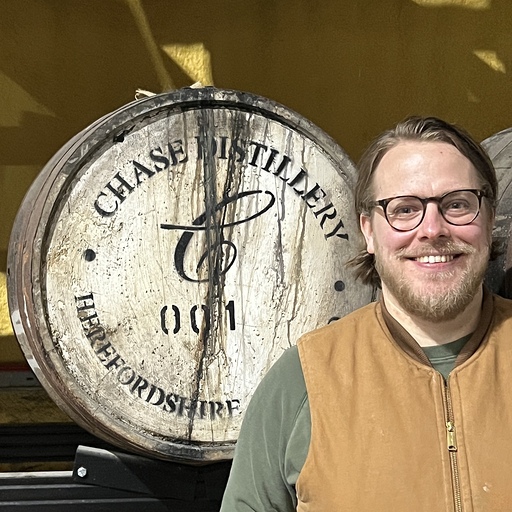
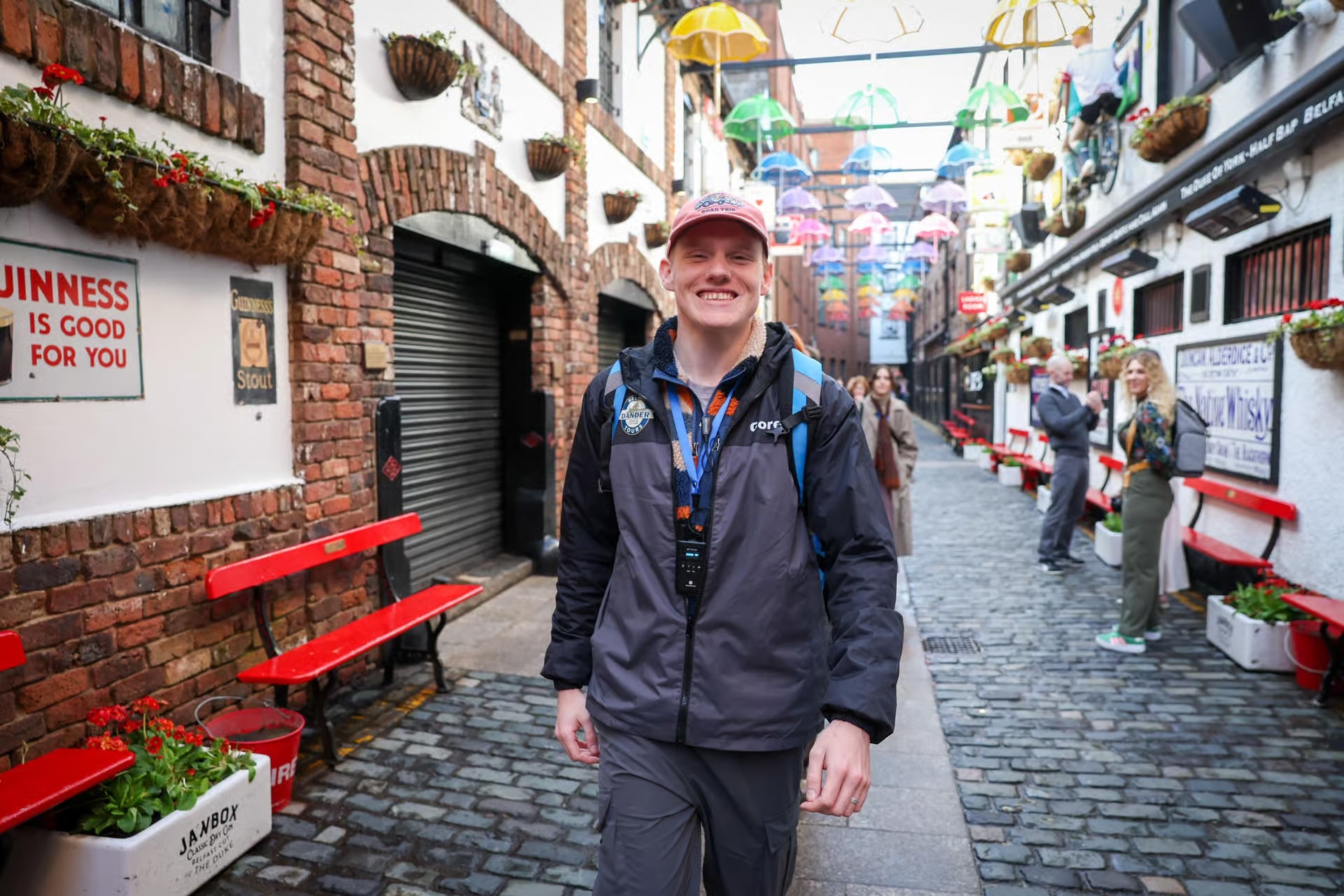

Founder Corey McConkey discusses how GetYourGuide’s platform has been central to his first year of success, and the elements that make A Belfast Dander distinctive and engaging for his customers.
“It’s about craic and culture,” says Corey McConkey. These are two distinct but fundamental parts of the Irish identity, and both are integral to A Belfast Dander, a local walking tour of Northern Ireland’s historic capital devised and delivered by Corey.
A minute of conversation with Corey is enough to reveal that the craic — the Irish term for fun, banter and good times — is certain to be present on his tours. An hour or so reveals his deep connection to the city and his passion for its rich and complex cultural tapestry.
What’s especially notable about Corey’s story is that it’s still so new, with just over a year under his belt leading walking tours of his home city. It’s also that, rather than building OTAs into his business after launch, GetYourGuide was his primary route to market.
“The whole process of setting up a tour felt so daunting,” he says. “I thought I’d have to get a website and then get my first bookings and then need word of mouth. Then I realized GetYourGuide pretty much skips all that.”
“All you need to do is make something unique on GetYourGuide, post it, and then you have access to millions of people. So I did it. It was just a hobby at that point, but a year later it's a fully fledged self-employed business.”
Here, he discusses his goals for the future of A Belfast Dander, and how he believes the platform can help him achieve them.
What is A Belfast Dander all about?
When you were young in Belfast, you’d ask someone “Do you want to go for a dander?” So I called it that because I think that's what a tour should be, to walk around the city and get to know it from a local’s perspective.
You get a lot of tours that go deep into subjects, dates, facts, and figures. Some people like that, but I've found that, for the most part, people just want to walk around like a local and get an overview of the city.
If you came on my walking tour and I bombarded you with that information, there's no reference, there's no context. More than likely, as soon as that tour finishes, 90% of it will be forgotten. So I try to make it about culture, a bit of fun, a little craic — a walk, a laugh, a joke, some stories — and I think it works. I usually ask the same questions at the end that I asked at the start, and they usually remember the answers.
How do the tours tend to work?
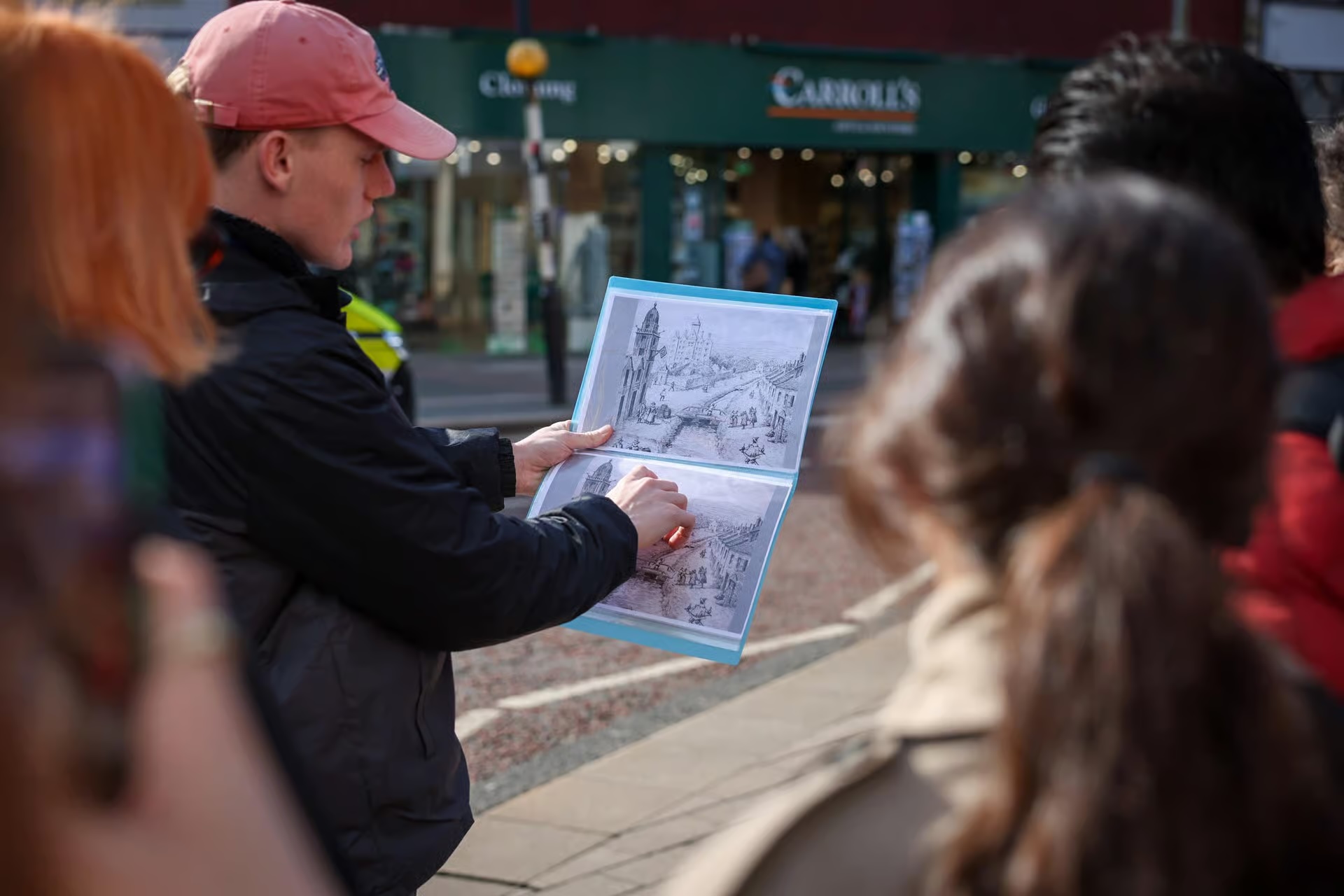
When I first started, I had an idea of doing Belfast and its buildings, then a Troubles tour, and then a Titanic tour. It was great at the start, a bit DIY, figuring out what worked and what didn't work. But the more I kept doing the tours, the more I realized Belfast is small and compact enough that I could get it all into one tour.
If you came to Belfast to learn about the Troubles, the civil war that took place here, there are three-hour tours. Unless you're really interested in that period or you're doing it for school, three hours on one subject is a lot.
So I've found people enjoy jumping between different topics, and Belfast is a city where you can do that. I always start with Belfast's industrial beginnings — how it came about, when we became a city, where it gets its name, and World War II — and I jump between topics so they get an overview.
How has GetYourGuide helped you start your business?
I did have someone build me a website, and it was a disaster. I have ideas in the future to get my own website and channel traffic through there, but at the minute, GetYourGuide is where all the business comes from.
That's what's good about GetYourGuide. If anyone's thinking about setting up a tour business, you think you have to make a website, but then how are you going to get people into the website? Then you're going to be on social media and promote it, but if you have no followers, who's going to book it? But once you're on GetYourGuide, if your city is a tourist destination, you're getting access to millions of people on that platform.
They pretty much just cut out all the hard work of getting the tour guide up and running; they do everything. Yes they'll take their commission, which is fair when you look at the amount of money I've made in the amount of time I've been doing this. That's pretty much all thanks to GetYourGuide, which was a free platform to join.
A very helpful thing about GetYourGuide is its backdrops and analytics. You can really go in and see where people are coming from, who's enjoying your tour the most, when's your best season, what's your best month, when's the best time to do tours. GetYourGuide has a lot of insights, so you can go in and make decisions based on real information.
How important are reviews to the business?
They're the most important thing. You couldn't even find me on GetYourGuide before, but if you type it in now, it will pop up in the first couple, thanks to reviews. I do my best to try and get reviews from people, I'll mention it at the end of the tour.
Still, I also have an automated message that I'll send the guests usually about a couple of hours after the tour, just saying “Drop me a review, I'd really appreciate it. It's just me at the minute; I'm just trying to scale up.” Things like that, because I'm just a local lad who's set up a business and is trying to make it successful.
I'll send them a message every night to ask for a review, and I'll do my best to respond to reviews within a couple of days. I do take a lot of pride in the reviews and at the minute, I think I’ve got around 120, which is not bad for a year. Nearly a quarter of the people are probably coming through and leaving reviews, which is good. They’re the lifeblood of getting more bookings.
As a small business, what are your plans for growth in the future?
At the minute it's just me, and sometimes I’m only working two hours a day delivering tours. When I get home, I have my evenings when I'll get the laptop open. I’ll have a look at the bookings, review potential revenue coming in, make sure nothing's double-booked, and make sure everything's going well. I read up on Belfast, learn new things, read my customers' feedback, make sure there's no messages, invoices, things like that.
In the future, though, I would love to get a couple of guides and get an office space. If I do that, then it's not just a walking tour, it's a company. There are different tours in Belfast: bus tours, walking tours, and different topics like the Troubles or the best of Belfast. My tour tries to do a bit of all of it in one, but over time, I've got an idea of what works and what doesn't.
There are opportunities out there: I can definitely see the upscale potential in taking school groups on walks, offering more tours for work groups, or running tours for a cruise ship operator.
I want to continue working out the supply and demand, creating more established connections, and building better relationships with different companies. At the minute, it's all about gathering all this knowledge for the future.
Key takeaways
- Strike the balance. Early in the process, Corey took the time and effort to play with the tour format and the topics he talks through. Now he feels like he’s in a sweet spot, but he also knows the value of adapting in real time to the audience.
- GetYourGuide is all you need to launch. Corey initially wanted a website, but soon realized that GetYourGuide’s platform could help him both reach customers and manage the logistics of running the company from the very start.
- Listen to the data. Corey uses GetYourGuide’s back end to give him real-time data about his customers, what’s engaging them and what’s not, and continues to refine his offering based on that.
- Reviews are paramount. Data and analytics are important, but verified reviews are crucial to Corey’s business, as they have boosted his visibility on GetYourGuide and provided him with direct feedback. He stresses the importance of taking the time to engage with them and reply, too.
- Plan for growth. While Corey’s business model is very lean, delivering the tours in the daytime and handling logistics in the afternoons and evenings. He’s focused on continuing to scope out new opportunities while making sure he’s in the right place to capitalize on them.
.png)